
Could Bucknell University’s Front Lawn, currently a sloping, open green space, between the Chapel and the ELC benefit from a makeover? When looking at old photos of campus, it is obvious that a large chunk of Bucknell was bare but with the hard work and dedication of many brilliant individuals, this campus has sprung to life.
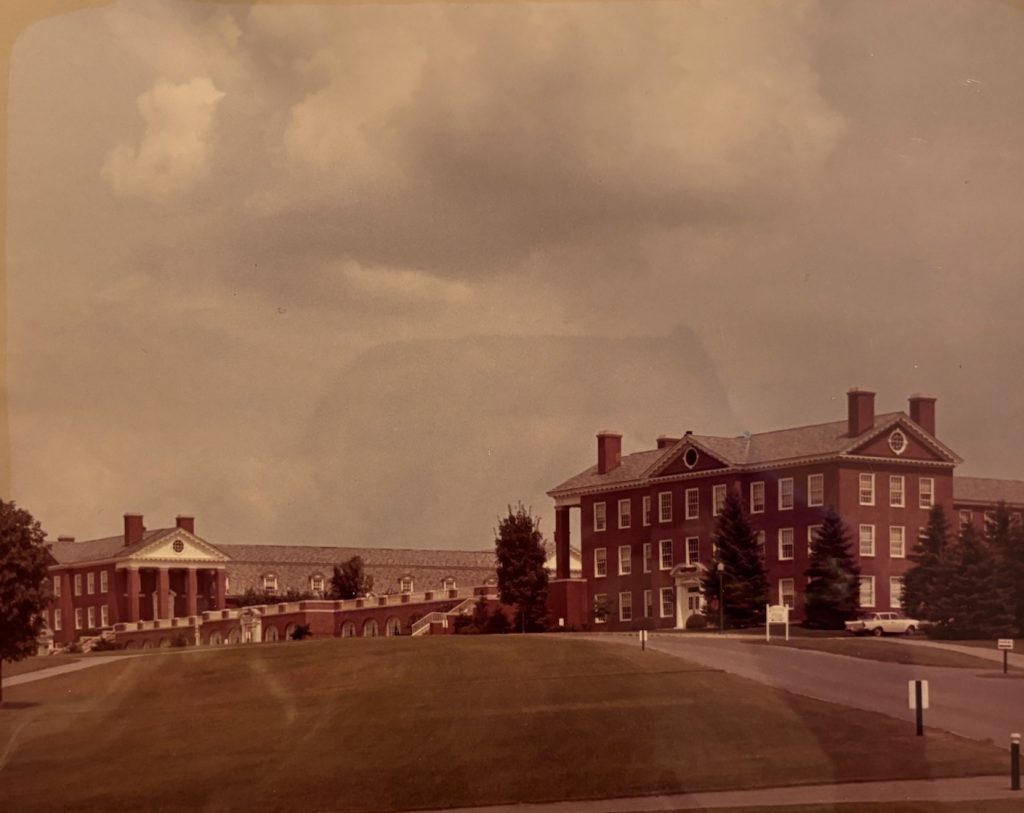
Although the rest of campus has received major renovations since the beginning, the Front Lawn has remained similar to what it was when first developed. “A lot of new trees planted along some parts of it, the path closest to Rook Chapel all those trees have been planted within the last 15 or 20 years. And then on the lower path that runs from the ELC down to Lang Center has a bunch of new trees that have been planted on the downhill side of it as well” explains Professor Martine on the recent plantings on the lawn.
The continuing introduction of strategically placed native trees and shrubs could enhance the space in several ways. Rows of mature oaks would create shade, perfect for studying or relaxing. These trees could also serve as a living classroom, showcasing the diverse native species of Pennsylvania.
A previous proposal envisioned a landscape teeming with trees, flowers, and designated gathering spaces along the pathways leading to Moore Avenue. President Bravman expressed support, stating it aligns with the college’s restoration goals, promoting carbon sequestration, reducing chemical runoff, and enhancing biodiversity.
However, this proposal was denied. Several factors could have contributed to this denial including money, alumni pushback, and sheer desire. This development could also potentially impact visibility. Concerns exist that additional features like lights, seating, and landscaping elements might obstruct the current view of the Malesardi Quadrangle from the Front Lawn and Moore Avenue.
While some faculty members believe it was rejected by the Board of Trustees, others advocate for its implementation. Professor Duane Griffin touched on the topic of the lawn explaining that “the fact is that right now the space is doing nothing” and the development of this area could provide a more positive and ecological use of the land.
With careful planning, both open space and ecological benefits can coexist. Large, open areas could remain for the activities many associate with the lawn. The Front Lawn could become a valuable asset, offering space for studying, socializing, and quiet reflection.
Beyond visual appeal, these changes would present a more biodiverse environment. Native plants would provide a habitat for birds, insects, and small mammals that contribute to a healthy ecosystem.
Ultimately, a redesigned lawn wouldn’t just be a more aesthetically pleasing space but would act as a symbol of Bucknell’s commitment to sustainability. By securing funding, garnering community support, and ensuring long-term care, Bucknell could work toward a vision for a more sustainable lawn.
Image 1: Bucknell Archivist
Resources:
- “The Bucknell Farm.” Bucknell University, www.bucknell.edu/life-bucknell/sustainability/bucknell-farm. Accessed 19 Mar. 2024.
- Granados, Xochitl ‘25. Bucknell Greenway, 10 August 2023. Independent Study.
- Martin, Laura J. Wild by Design: The Rise of Ecological Restoration. Harvard University Press, 2022.
- Thames, Brooke. “Traverse a New Trail.” Bucknell Magazine, 1 July 2022, magazine.bucknell.edu/issue/summer-2022/traverse-a-new-trail/.